
Case study for a behavioral health provider
An 11-module eLearning orientation for MST therapists and supervisors
Client project. Screens from the delivered course are below.
AI-generated image- Industry
- Behavioral health
- Project
- Custom eLearning (Articulate) with animation
At a glance
Project at a glance
- interactive eLearning modules
- 11
- words of source material turned into short scenes
- 100K+
- case family carried through each module
- 1
Inside the course
Screens from the delivered modules
Module opener with a clear “Begin Module” start 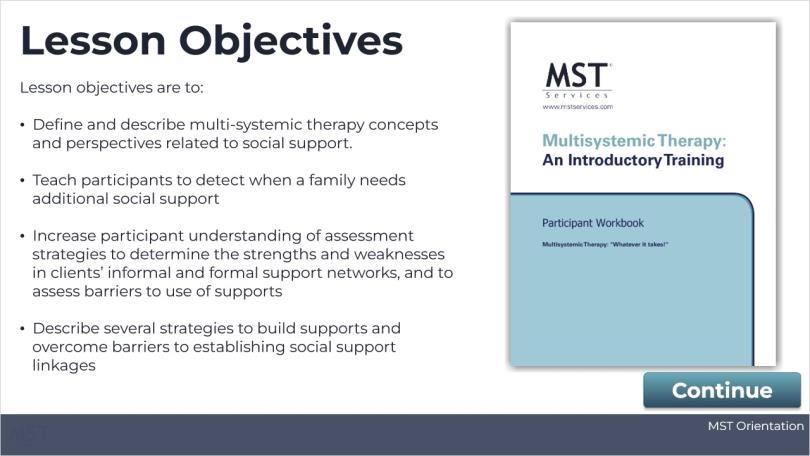
Objectives tied to the participant workbook 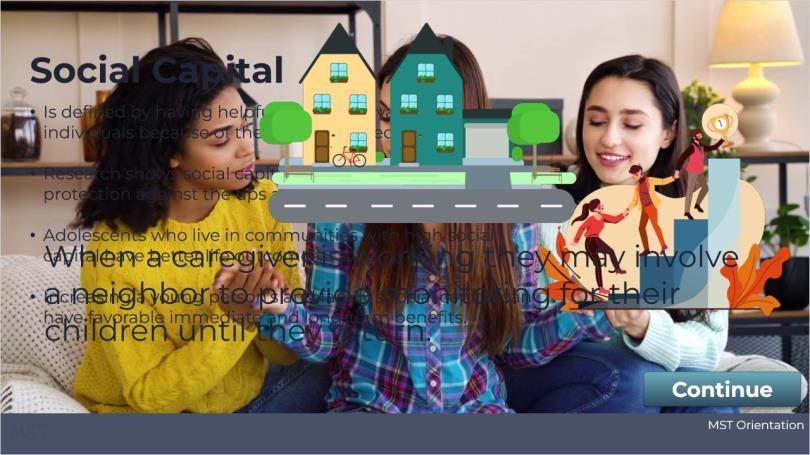
Concept screens that pair one idea with one image 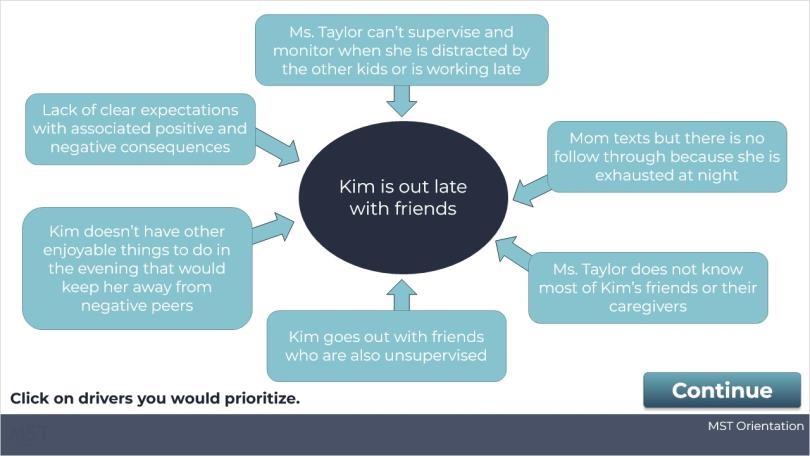
Decision map on the case family: pick the drivers to prioritize 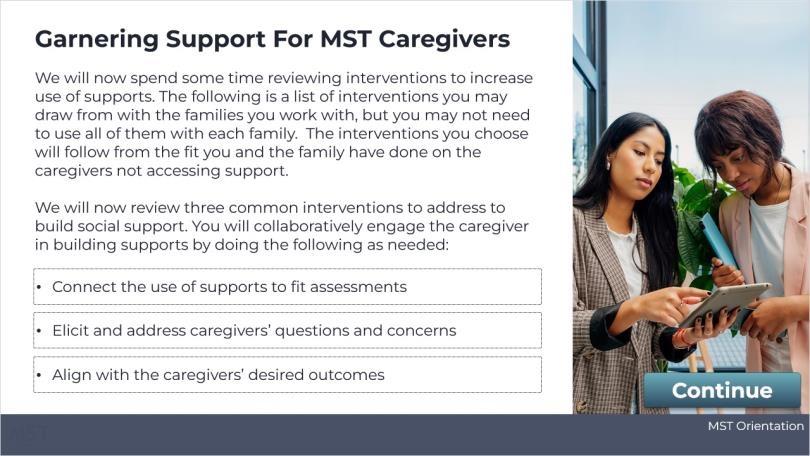
Interventions broken into steps a therapist can use 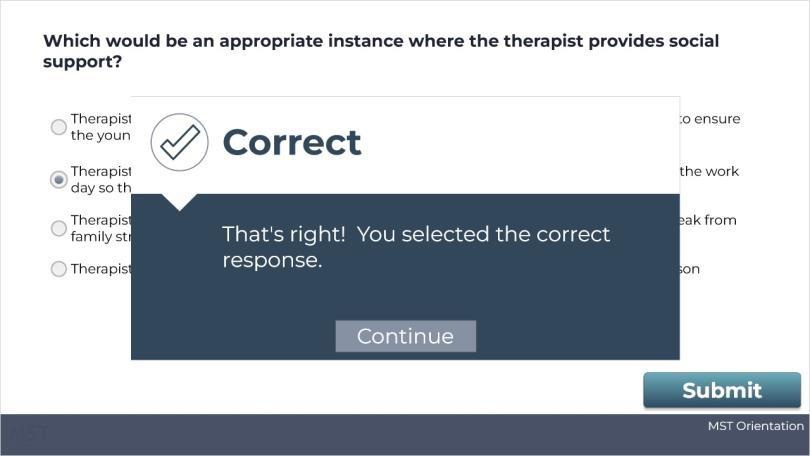
Knowledge checks with feedback on every answer
The challenge
A lot of material, and a lot riding on it
New MST therapists and supervisors need a deep grounding in the model before they work with families. The source material ran to well over 100,000 words across the orientation, built for reading, not for learning.
Dense clinical content
Concepts like social capital, ecological perspective, and referral-behavior drivers had to land with people new to the model.
Theory has to become practice
Participants needed to apply ideas to a real family situation, not just recognize definitions.
A workbook alongside the course
The eLearning had to work hand in hand with the participant workbook used in the experiential training.
Our approach & what we built
Case-based modules people move through, not scroll past
We designed and built each module in Articulate, with custom Vyond animation where a scene needed it.
Case scenarios
- A recurring family case (Kim and Ms. Taylor) carries concepts through the module
- “Click the drivers you would prioritize” decision maps on the case
- Worked examples participants compare to their own thinking
- Articulate
- Vyond animation
- Scenario-based learning
- Knowledge checks
- Behavioral health
- Workbook integration

Training that shows up on the job
The measure that matters is what people do differently on their next shift, not how many slides they clicked through.
Let’s talk
Want results like these? Start with a call.
Tell us who you need to train. We’ll share relevant examples and send a fixed quote.